What Ancient Apache Observation Practices Do to Your Brain — And Why It Makes You a Better Traveler
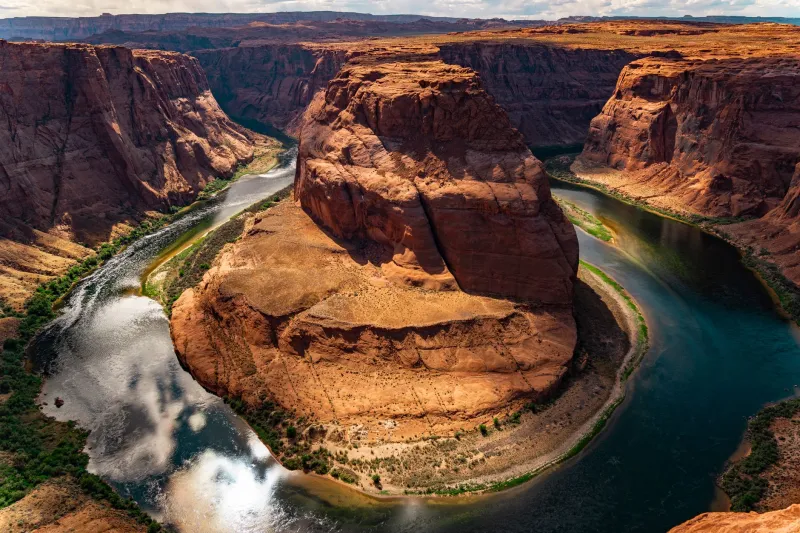
Most of us show up to the Southwest with a camera roll ready to fill and a list of landmarks to check off. We're efficient. We're moving. And somewhere between the trailhead selfie and the gift shop receipt, we wonder why the whole thing felt a little hollow.
Here's what nobody puts in the travel brochure: the landscape isn't performing for you. It's communicating. And if you don't know the language, you're going to miss almost everything.
Apache Traditional Ecological Knowledge — the accumulated observational wisdom passed down across generations — isn't just a collection of nature facts. It's a way of paying attention. And according to both indigenous knowledge keepers and a growing number of cognitive scientists, learning even a fraction of that attentional framework can fundamentally change how your brain processes place.
The Difference Between Looking and Seeing
There's a concept embedded in Apache ecological tradition that doesn't have a clean English translation, but it roughly describes the practice of reading a place as a living text — where every animal track, plant cluster, wind shift, and shadow angle is a sentence in an ongoing story about the health and mood of that landscape.
This isn't mysticism. It's hypervigilant pattern recognition developed over thousands of years of survival-level observation.
"When you're taught to watch the way a hawk circles versus the way it drifts, you're not just learning bird behavior," explains one cultural educator who works with heritage tour groups across the Southwest. "You're learning to hold multiple data points simultaneously and ask what they mean together. That's a different cognitive mode than most modern people operate in."
Cognitive scientists have a name for what happens when we shift into that mode: distributed attention. Instead of focusing narrowly on a single object or goal, the brain opens up into a broader, more ambient awareness — taking in peripheral movement, sound, texture, and relationship. Neurologically, this activates different processing pathways than the task-focused attention most of us default to in daily life.
Researchers studying attention restoration theory — a framework developed by psychologists Rachel and Stephen Kaplan — have found that natural environments can pull us into this wider attentional state almost involuntarily. But here's the kicker: having a framework for what you're noticing accelerates and deepens that shift dramatically.
Why Knowledge Changes What You See
Imagine walking through a canyon and noticing a cluster of Apache plume shrubs near a dry wash. Without context, it's just scenery. But if you know that Apache plume tends to grow near subsurface water and that its feathery seed plumes were historically used to make arrows and brush — suddenly that plant is a landmark, a resource map, a piece of living history.
Your brain just got more invested in the landscape.
This is what neuroscientists call top-down processing — where prior knowledge shapes what your sensory system prioritizes and how it encodes experience. People with richer ecological frameworks literally perceive more in any given environment because their brains have more hooks to hang new observations on.
"Once someone learns to identify three or four keystone plants in a desert ecosystem, they start noticing the insects on them, the birds near them, the soil conditions around them," says one environmental educator who has worked with indigenous-led programs in the Four Corners region. "The knowledge creates a kind of perceptual gravity. The landscape starts pulling you in."
Apache observational traditions operate on exactly this principle — but scaled across generations of accumulated detail. Animal behavior, plant relationships, weather patterns, seasonal shifts — all of it woven into a relational map that makes the land legible in ways that a trail marker never could.
Slowing Down Is a Neurological Event
One of the first things guides at Apache Ta Tours will tell you: the Southwest doesn't reveal itself to people in a hurry. That's not just philosophy. There's real biology behind it.
When we rush — checking the map, calculating time to the next stop, half-listening while composing a caption — our nervous system stays in a low-grade alert state. Cortisol ticks along. Peripheral awareness narrows. We're physically less capable of taking in the environment around us.
Slowing down, particularly in a natural setting with purpose and curiosity, activates what researchers call the default mode network — the brain's reflective, integrative system. This is the neural architecture responsible for meaning-making, memory consolidation, and the sense that an experience mattered. It's also, interestingly, associated with what psychologists describe as awe.
Apache-guided observation practices essentially create the conditions for this shift on purpose. Sitting quietly at dawn to watch how the light changes the color of a mesa. Following the path of a single ant colony to understand where moisture is. Listening to the difference between a wind moving through juniper versus through ponderosa pine. These aren't passive activities — they're active invitations to a different neurological state.
Travelers who've done multi-day cultural immersion programs consistently describe a point, usually around day two or three, where something shifts. "I stopped thinking about what I was going to do next and just started being where I was," one traveler from Colorado told us after a guided experience in the Sacramento Mountains. "It sounds simple, but I haven't felt that way on a trip in years."
The Interconnection Effect
Maybe the most profound thing Apache ecological knowledge does — both culturally and cognitively — is teach you to see in relationships rather than isolated objects.
Western nature observation tends to be taxonomic: identify the bird, name the plant, photograph the formation. Apache traditional knowledge is fundamentally relational: what is this plant doing here, who depends on it, what does its presence tell you about what else is happening in this place?
That relational framing does something interesting to the traveler who adopts it, even partially. It dissolves the sense of being a spectator. When you start asking what you are in relation to this landscape — what you're taking from it, what you're leaving, how your presence fits into its ongoing story — the trip stops being a consumption experience and starts being something closer to participation.
Cognitive researchers studying place-based learning have documented that this relational awareness tends to outlast the trip itself. People who develop even basic ecological literacy in a new environment report thinking about that place differently for months afterward — recalling not just what they saw, but how things fit together.
How to Start Before You Even Arrive
You don't have to wait until your boots hit the trail. One of the most useful things you can do before a Southwest heritage journey is start practicing distributed attention in your everyday environment. Pick one natural system near your home — a single tree, a small garden, a stretch of creek — and visit it repeatedly with the intention of noticing relationships, not just features.
What's living on it? What's eating what's living on it? How does it change with weather, with time of day, with season?
This primes your brain for the kind of observational mode that Apache-guided experiences build on. You'll arrive in the Southwest not as a blank slate, but as someone whose attention is already warming up.
And when your guide points out that the way a particular hawk is hunting tells you something about the rodent population, which tells you something about the grass seed crop, which tells you something about the rainfall this spring — you'll be ready to follow that thread all the way down.
That's when the Southwest stops being scenery and starts being a conversation.
Apache Ta Tours offers small-group cultural immersion experiences led by Native guides throughout the Southwest. Our itineraries are designed to slow you down and open you up — because the best travel doesn't just change where you've been. It changes how you see.