One Foot at a Time: How Apache Movement Traditions Turn a Desert Walk Into Something Sacred
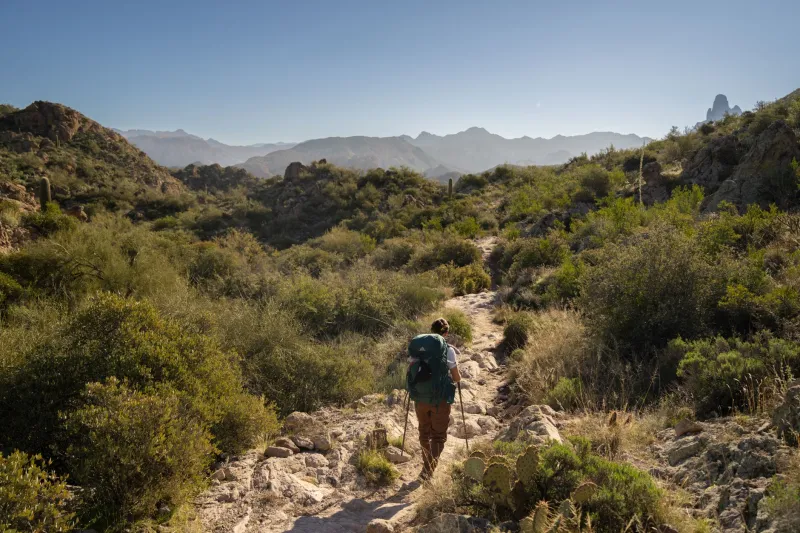
Most people arrive in the desert ready to conquer it. They've got the trekking poles, the moisture-wicking shirts, the downloaded trail map. They set a pace, hit their mileage goal, and head back to the trailhead feeling accomplished. Nothing wrong with any of that — but they've also missed almost everything.
There's a different way to move through this landscape. It doesn't require gear. It doesn't require a certain fitness level. It does require you to slow way, way down — and to pay a kind of attention that most of us have honestly forgotten how to give.
Apache movement traditions, refined across centuries of living intimately with the Sonoran and Chihuahuan deserts, treat walking not as a means of getting somewhere but as a practice in itself. A conversation with the land. And when you learn even the basics of that approach, a trail you've walked a dozen times can feel like somewhere you've never been.
Why Stillness Starts Before You Stop Moving
Here's something that surprises a lot of first-time guests on our cultural immersion hikes: the preparation for a mindful desert walk doesn't begin at the trailhead. It begins before you leave wherever you're staying.
In Apache tradition, there's a long-standing understanding that the mind you carry onto the land is the mind you'll experience the land through. Elders have described this as arriving with your whole self — not just your body, but your attention. That means taking a few minutes before you set out to quiet the mental chatter. Not through any elaborate ritual, just through deliberate stillness. Stand outside. Feel the temperature. Notice what the air smells like. Let your eyes soften rather than focus hard on anything specific.
This isn't mysticism — it's practical preparation. You're essentially calibrating your senses before you ask them to do real work.
The Breath-Footfall Connection
Once you're on the trail, the central technique is disarmingly simple: sync your breath to your steps.
Inhale for two or three steps. Exhale for two or three steps. That's it. But hold that rhythm for ten minutes on a desert path and something genuinely shifts. Your pace naturally slows. Your peripheral vision opens up. You start noticing the small things — a lizard motionless on a warm rock, the way the light catches ironwood bark, the particular crunch of caliche underfoot versus packed sand.
Apache scouts developed this kind of attentive locomotion out of necessity. Moving quietly and observantly wasn't a spiritual exercise in isolation — it was survival intelligence. But the byproduct of that discipline was a profound, continuous relationship with the environment. Every walk was also a reading of the land.
When you bring that same breath-paced rhythm to a hike through, say, the Superstition Wilderness or the desert flats outside Tucson, you start to understand what that relationship feels like from the inside. You stop being a tourist moving through a postcard and start being a participant in an actual living ecosystem.
Let Your Feet Do the Listening
One of the more counterintuitive pieces of guidance we share on guided walks is this: pay attention to what the ground is telling your feet, not just what your eyes are telling your brain.
Most of us hike visually. We look ahead, we look at the view, we check our phones. But the soles of your feet are gathering information constantly — the temperature of the soil, shifts in terrain, the give of sand versus the firmness of hardpan. In Apache walking traditions, this sensory input from below is considered just as important as what you see ahead.
Try this on your next desert walk: for a stretch of five minutes, close your eyes briefly with each exhale (only when the terrain is flat and safe, obviously). Let your feet feel the path. Then open your eyes on the inhale. The alternation creates a rhythm that pulls you deeply into the present moment in a way that's hard to manufacture any other way.
The Sound Map
Another practice worth borrowing: before you start walking, stand still for two full minutes and build what some Apache guides describe as a sound map of your surroundings.
Close your eyes. Identify every sound you can hear — near, far, above, below. The buzz of insects. Wind moving through ocotillo. A distant hawk. Your own heartbeat if it's quiet enough. Place each sound in your mental map of the space around you.
Now start walking. Notice how the sound map changes with every few steps. What fades? What gets louder? What new sounds enter? This exercise trains you to experience the desert as a dynamic, constantly shifting environment rather than a static backdrop. It's one of the fastest ways to go from passive observer to genuine participant.
What Slowing Down Actually Does to Your Experience
We hear it from guests all the time, usually on the drive back: I can't believe how much I saw. They're not talking about landmarks. They're talking about the texture of the place — the quality of light at a specific hour, the behavior of a roadrunner they watched for a full ten minutes instead of photographing and moving on, the way the desert smells completely different in shadow than in direct sun.
That richness was always there. It's available on every trail in the Southwest. But it's only accessible at a certain pace — and with a certain quality of attention.
Apache walking traditions understood this implicitly. The desert isn't stingy with what it offers. It's just quiet about it. It rewards the patient, the present, the genuinely curious.
Practical Tips for Your Own Desert Walk
You don't need a guide to start practicing this — though walking with someone who knows the land adds layers that are hard to replicate on your own. Here are a few things you can bring to any Southwest trail:
- Leave the earbuds behind. Seriously. Even one hike without a podcast or playlist will recalibrate your relationship with the landscape.
- Set a soft pace goal, not a hard one. Tell yourself you'll cover two miles in two hours instead of forty-five minutes. See what that changes.
- Stop more than feels necessary. Every ten minutes or so, just stop. Stand still. Let the desert catch up to the fact that you're there.
- Name five things you can feel physically — sun on your neck, the weight of your pack, the texture of your shirt, the ground under your heel, the movement of air across your forearm. This is a fast anchor back to the present moment.
- Don't photograph everything immediately. Look first. Really look. Then decide if you want a photo.
The Desert Has Been Waiting
There's a reason people have been drawn to the American Southwest for thousands of years — and it isn't just the scenery. It's something the land does to you when you let it. Something about the scale of it, the heat, the silence, the way the sky sits enormous and close at the same time.
Apache walking traditions are one of the oldest, most refined guides to accessing that something. You don't have to adopt a culture that isn't yours to benefit from the wisdom embedded in it. You just have to be willing to slow down, breathe deliberately, and let the desert be more than a backdrop.
One foot at a time. That's all it takes to start.