Rock, Symbol, Story: A Traveler's Field Guide to Reading Apache Archaeology in the Wild
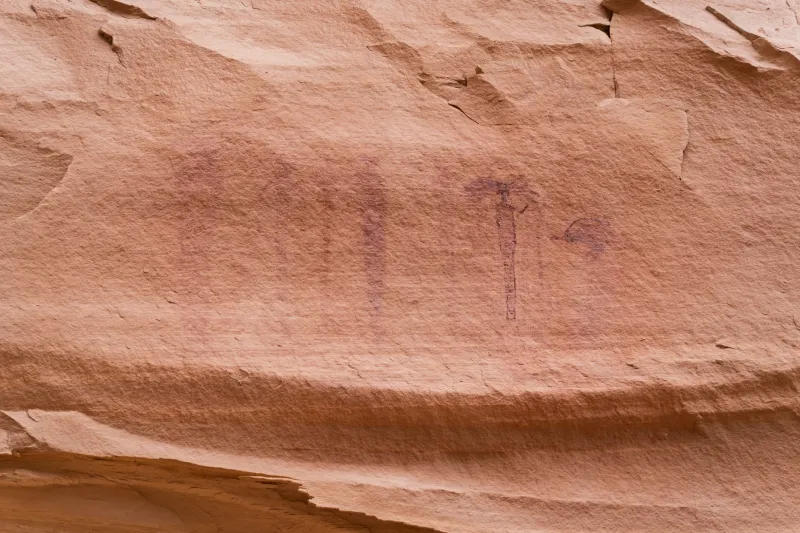
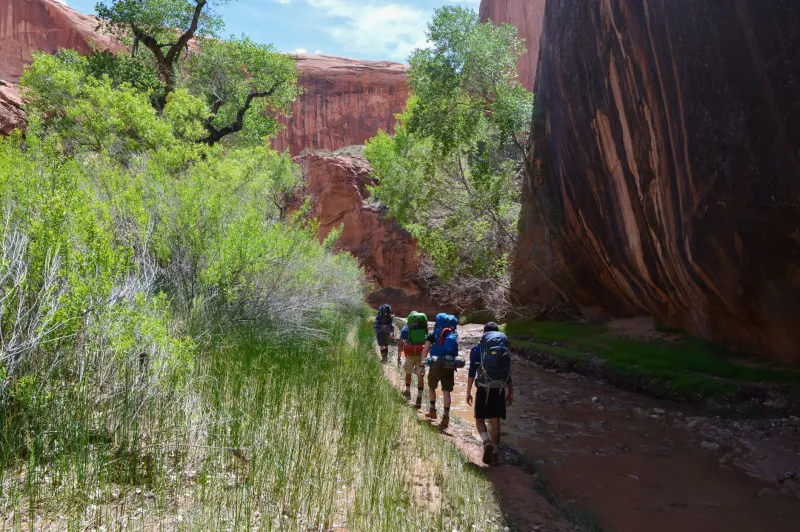
There's a moment that happens to almost every traveler in the Southwest. You're hiking a canyon trail, the sun is doing something dramatic to the red rock walls, and then — there it is. A cluster of figures etched into stone. Spirals, hands, animals, shapes you can't quite name. Your brain fires in about six directions at once. Who made this? What does it mean? Should I be standing this close?
That moment of wonder is worth protecting. But wonder without context can slide into misunderstanding fast, and misunderstanding in ancestral Apache territory carries real weight. So let's talk about what you're actually looking at — and how to engage with it in a way that honors the people whose ancestors put it there.
First, a Distinction Worth Making
Not everything carved or painted on Southwestern rock belongs to the same tradition or time period. The region has been home to dozens of distinct cultures over thousands of years — Ancestral Puebloans, Hohokam, Mogollon, and Apache peoples among them — and their material traces often overlap in the same landscape.
Apache peoples, broadly speaking, arrived in the Southwest later than some of the region's other ancient cultures, with many groups establishing deep roots in present-day Arizona, New Mexico, and parts of Texas and Colorado between roughly 1300 and 1500 CE. That doesn't make their archaeology any less layered or significant — it just means the story is more recent and, in some ways, more directly connected to living communities today.
When you're exploring the backcountry, keep that in mind: you're not reading a single chapter. You're standing inside a library.
What to Look For: Petroglyphs vs. Pictographs
Here's the quick vocabulary lesson that changes everything. Petroglyphs are carved or pecked into rock surfaces — you'll see them as incised lines or abraded patches where the outer patina has been removed to reveal lighter stone beneath. Pictographs are painted onto rock, using pigments made from minerals, plants, and organic materials. Both show up across Apache ancestral territory, sometimes at the same site.
Petroglyphs tend to survive longer because they're literally part of the rock. Pictographs are more fragile — moisture, sunlight, and human contact degrade them quickly. If you see painted imagery, maintain a respectful distance. Even the oils from your skin can accelerate deterioration.
Common Symbols and What Researchers Know (and Don't Know)
Let's be honest about something: rock art interpretation is genuinely hard, and anyone who tells you definitively what every symbol means is oversimplifying. That said, researchers working alongside Indigenous communities have developed some useful frameworks.
Spirals appear widely across the Southwest and are frequently associated with solar and seasonal markers. Some spiral petroglyphs are positioned so that light hits them precisely at solstices or equinoxes — they functioned, in part, as calendars.
Handprints (both positive, where a painted hand leaves its outline, and negative, where paint surrounds the hand) are among the most emotionally immediate images you'll encounter. They're personal marks — presence recorded in stone.
Animal figures — deer, bighorn sheep, serpents, birds — often relate to hunting, ceremony, or clan identity. Among Apache groups, specific animals carried spiritual significance tied to particular ceremonies and responsibilities.
Geometric patterns — grids, zigzags, concentric circles — are harder to generalize. Context matters enormously. The same shape can mean very different things in different cultural traditions.
One rule worth carrying: if you don't know, don't guess loudly. Sit with not knowing. That's not a failure — it's actually a more honest relationship with the past.
How to Approximate Age in the Field
You don't need a lab to get a rough sense of how old a petroglyph might be. Rock varnish — that dark, almost shiny coating you see on desert stone — forms very slowly over centuries. Petroglyphs carved through heavy varnish, where the exposed rock has started to re-darken, are almost certainly older than images where the exposed surface still looks fresh and pale.
Overlapping images also tell a story. When one carving is clearly made on top of another, the underlying image is older. Tracking those layers is like reading stratigraphic geology — the deeper you go, the further back in time.
Style and subject matter offer clues too. Certain artistic conventions — proportions, posture, tool marks — shifted over time and across cultures. If you've done even a little reading before your trip, you'll start to notice these patterns.
Structural Remains: Reading What's Left of Built Spaces
Beyond rock art, Apache ancestral territory contains remnants of wickiup rings (circular stone arrangements that anchored the bases of traditional brush shelters), hearth scatters, and lithic debris — the flaked stone left behind by toolmakers. These sites are subtler than dramatic cliff dwellings, but they're everywhere once you know what you're looking for.
A ring of stones in an otherwise open landscape isn't random. A dark patch of soil in a dry creek bed might be centuries of accumulated ash and charcoal from a hearth. Clusters of chipped flint or obsidian chips mark places where people sat and worked.
If you find something like this: look, don't touch, don't collect. Under the Archaeological Resources Protection Act, removing or disturbing artifacts on federal land is a federal offense. Beyond legality, there's a simpler reason: these objects carry information that context alone can preserve. Once they're moved, that information is gone.
The Ethics of Independent Exploration
Here's the tension at the heart of this kind of travel: the Southwest's archaeological heritage is accessible, compelling, and genuinely educational — and it's also fragile, contested, and still deeply meaningful to living communities.
Independent exploration isn't inherently disrespectful. But it requires a different kind of attention than checking a box on a sightseeing list.
Stay on established trails where they exist. Cryptobiotic soil crust — that dark, lumpy ground cover you'll see in desert flats — takes decades to form and can be destroyed by a single footstep. So can subtle surface archaeology.
Don't chalk, trace, or photograph with flash at rock art sites. All of these cause damage, even when they don't look like they do.
Research whether a site is considered sacred before you visit. Some locations are open to visitors; others are not, and the distinction matters. Tribal cultural preservation offices often publish guidance, and it's worth looking before you go.
Listen to land managers and tribal rangers. If someone affiliated with a Native community asks you to step back or move along, do it without argument. Their relationship to that land predates your vacation by generations.
Before You Head Out
A few resources worth bookmarking: the Arizona State Museum and the Museum of New Mexico both offer solid public education materials on regional rock art. The Apache Stronghold organization and various tribal historic preservation offices publish guidance on respectful visitation in Apache territory specifically. And if you want a deeper experiential foundation before going solo, joining a guided tour with an Indigenous-led operator — like what we offer here at Apache Ta Tours — gives you interpretive context that no field guide can fully replicate.
The stone isn't going anywhere. But your ability to read it — and to do so with genuine respect — grows every time you slow down, pay attention, and choose understanding over assumption.
That's the real archaeology of travel: learning to see what was always already there.